

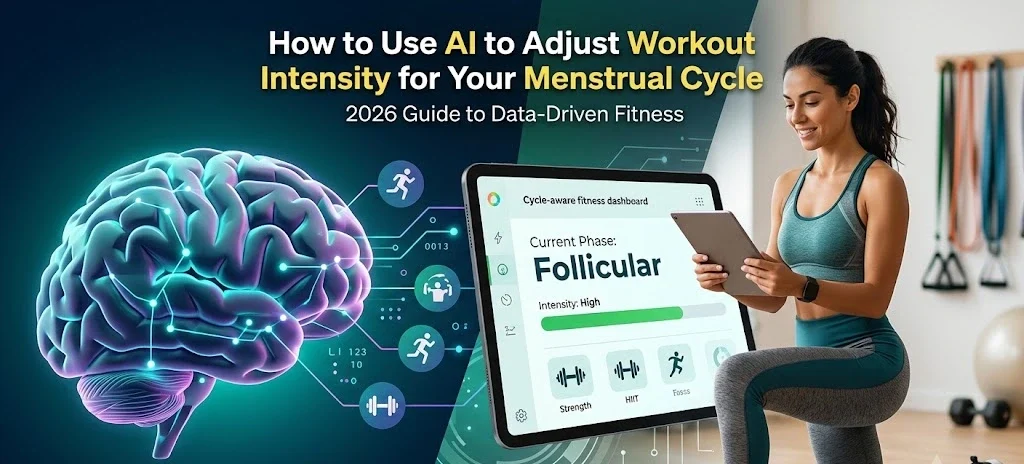
How to Use AI to Adjust Workout Intensity for Your Menstrual Cycle (2026 Guide)
Have you ever crushed a personal record one week, only to feel like you could barely lift a weight the next? If you have, you’re not alone. The frustration of fluctuating energy levels is a common experience for those with a menstrual cycle.
Table Of Content
- What is Cycle Syncing?
- Why Science Matters in 2026
- Benefits of an AI Menstrual Cycle Workout Plan
- 1. Menstrual Phase (Days 1–5): The “Reset.”
- 2. Follicular Phase (Days 6–13): The “Rebuild.”
- 3. Ovulatory Phase (Days 14–16): The “Peak.”
- 4. Luteal Phase (Days 17–28): The “Restore.”
- How to Integrate AI Into Your Cycle-Syncing Routine
- 1. Leverage Specialized Cycle-Syncing Apps
- 2. Use ChatGPT as Your Personal AI Cycle Coach
- 3. Data-Driven Training with Conventional Fitness Apps
- Nutrition: The Missing Link in Your AI Training Plan
- Why This Method Ranks High for Long-Term Success
- Avoid Overtraining and Burnout
- Improved Mind-Body Connection
- Consistency is Easier
- Professional Tips for Success in 2026
- Conclusion: Embrace the Flow
The solution isn’t to push harder or feel guilty for missing a session—it’s about cycle syncing. In 2026, technology has finally made this intuitive approach accessible to everyone. By leveraging the power of Artificial Intelligence (AI), you can now align your fitness routine with your body’s natural hormonal rhythms, ensuring your training supports your health rather than fighting against it.
In this comprehensive guide, we will explore how to use AI to adjust your workout intensity in line with your menstrual cycle, helping you achieve more consistent results, improved recovery, and a deeper connection with your body.
What is Cycle Syncing?
Cycle syncing is a wellness approach that aligns your daily routines—including diet, exercise, and social commitments—with the four phases of your menstrual cycle. By understanding the hormonal shifts occurring throughout the month, you can tailor your activities to match your body’s fluctuating energy, mood, and recovery capacity.
While cycle syncing has been a popular holistic practice for years, it has often been criticized for lacking personalized data. That is where AI changes the game. Instead of relying on generalized, one-size-fits-all advice, AI tools can analyze your specific symptom logs, performance data, and energy levels to provide a bespoke training plan.
Why Science Matters in 2026
While recent research highlights that objective athletic performance markers—such as running speed or maximal strength—often remain consistent throughout the cycle, the subjective experience of training is undeniable. When you feel tired, bloated, or irritable, your perceived exertion is higher, even if your muscles are physically capable. Cycle syncing is less about “hacking” physiology for elite gains and more about creating a sustainable, long-term relationship with fitness that respects your comfort, mental health, and recovery needs.
Benefits of an AI Menstrual Cycle Workout Plan
Before letting AI do the heavy lifting, it helps to understand the “why” behind the adjustments. Your hormonal profile changes throughout the month, influencing everything from muscle-building capacity to body temperature regulation.
1. Menstrual Phase (Days 1–5): The “Reset.”
At the start of your cycle, both estrogen and progesterone are at their lowest. You may experience symptoms like cramping, fatigue, or sensitivity.
-
AI Focus: Configure your AI to prioritize “Recovery Mode.” Ask for low-impact, restorative sessions that focus on blood flow rather than calorie burn. Think Yin Yoga, walking, or gentle stretching.
2. Follicular Phase (Days 6–13): The “Rebuild.”
As estrogen begins to climb, you’ll likely feel a distinct uptick in energy and motivation. Your body is biologically primed for rebuilding.
-
AI Focus: This is the time to feed your AI goals for building strength or endurance. Increase the volume and intensity of your resistance training.
3. Ovulatory Phase (Days 14–16): The “Peak.”
Estrogen peaks during this window, often accompanied by high levels of testosterone. Many women feel their strongest and most confident here.
-
AI Focus: Use this window to test your limits. Program HIIT sessions, heavy lifting, or endurance challenges. Your AI should be set to “High Performance” mode.
4. Luteal Phase (Days 17–28): The “Restore.”
Progesterone rises, which can have a warming, sedative effect. You might notice increased body temperature, hunger, and a natural pull toward introspection.
-
AI Focus: Transition your plan toward maintenance. Prioritize steady-state cardio and moderate-intensity lifting. Avoid pushing through “all-out” sprints if you are feeling the classic pre-menstrual dips in energy.

How to Integrate AI Into Your Cycle-Syncing Routine
Using AI to manage your training doesn’t mean you need to spend hours planning. Modern AI-powered tools can analyze you. Here is how you can set up your own intelligent, cycle-aware fitness system.
1. Leverage Specialized Cycle-Syncing Apps
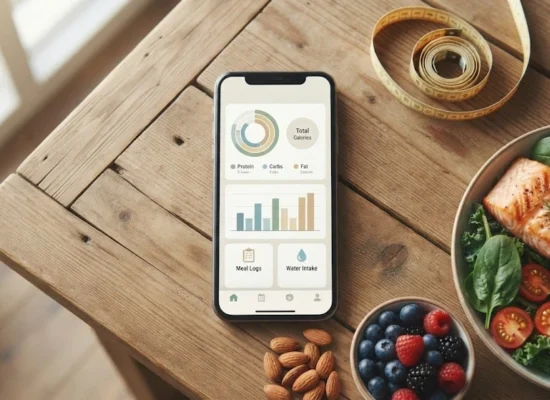
There are now apps specifically designed for this purpose. For instance, Drop It acts as a context-aware AI coach. It allows you to log daily symptoms and automatically adapts your workouts based on your phase, helping you scale intensity without the risk of burnout.
2. Use ChatGPT as Your Personal AI Cycle Coach
You don’t need a premium app to get started. You can use large language models like ChatGPT to create highly personalized, phase-based routines. The key is providing the right context.
Try this comprehensive prompt in your favorite AI tool:
“Act as an expert fitness coach specializing in women’s hormonal health. I am currently in the [Insert Phase] phase of my cycle. I am feeling [Insert Symptoms]. My long-term fitness goals are [e.g., strength training, running a 5k]. Create a 3-day weekly workout plan that modulates intensity to align with my hormonal phase. Include specific recovery tips and suggestions for how to scale the intensity up or down depending on how I feel on the day of the workout.”
3. Data-Driven Training with Conventional Fitness Apps
Even if an app isn’t explicitly branded for “cycle syncing,” apps like Fitbod or Jefit provide sophisticated recovery-aware programming. You can use these tools to manually select lower-intensity routines during your Luteal and Menstrual phases, allowing the AI to balance your workload and ensure you don’t overtrain.
Nutrition: The Missing Link in Your AI Training Plan
To truly maximize your performance, your nutrition must also be synced to your cycle. An AI tool can help you structure your macros to align with your hormonal needs.
-
Menstrual Phase: Focus on iron-rich foods (lean beef, lentils, spinach) to replace what is lost, paired with Vitamin C to aid absorption.
-
Follicular Phase: Your body is sensitive to insulin here, making it a great time for complex carbohydrates (sweet potatoes, quinoa) to fuel your rising energy.
-
Ovulatory Phase: Focus on antioxidant-rich foods (berries, leafy greens) to support recovery from high-intensity output.
-
Luteal Phase: Increase intake of magnesium and fiber to help manage potential bloating and cravings.
Why This Method Ranks High for Long-Term Success
Avoid Overtraining and Burnout
By backing off when your body needs recovery (such as during the late Luteal phase), you allow for better physiological adaptation. This prevents the “cycle of exhaustion” where you push hard through fatigue, only to crash later.
Improved Mind-Body Connection
AI provides the data, but you provide the context. By logging your symptoms and observing how your body responds to different intensities during different phases, you become more attuned to your own physical signals.
Consistency is Easier
When your workout plan acknowledges that you are a human with a changing hormonal landscape, you are far less likely to quit. Adjusting intensity—rather than skipping workouts entirely—keeps you in the habit of movement, which is the cornerstone of long-term health.
Professional Tips for Success in 2026
-
Track for 2–3 Months: AI is only as good as the data it receives. Spend the first few months simply logging your cycle and energy levels. Many apps now integrate with Apple Health or Google Fit, making this process seamless.
-
Prioritize Recovery When Indicated: If you are in your Menstrual phase and the AI suggests a high-intensity session, don’t be afraid to swap it. The goal is to use the AI as a guide, not a dictator.
-
Focus on Movement Quality: As mentioned in our guide on AI Camera Tools for Workout Form, always use technology to ensure you are moving correctly. Even during low-intensity phases, the quality of movement matters more than the weight on the bar.
-
Consider the Contraceptive Factor: If you are on hormonal birth control, your natural cycle is flattened. In this case, treat your training as a consistent baseline rather than a cyclical program, or focus on how you feel week-to-week regardless of hormones.
Conclusion: Embrace the Flow
Cycle syncing with AI isn’t about restricting yourself; it’s about optimizing your potential. By aligning your training intensity with the natural rhythms of your menstrual cycle, you can stop fighting your body and start working with it.





No Comment! Be the first one.