

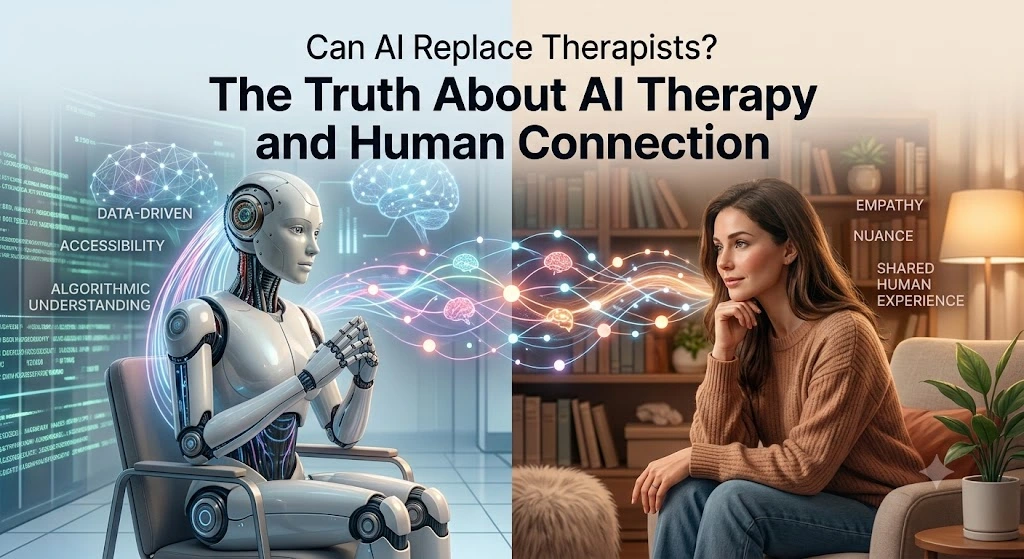
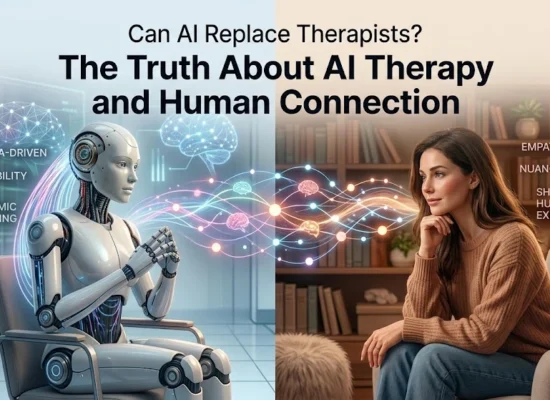
Can AI Replace Therapists? The Truth About AI Therapy and Human Connection
It was 2 a.m. when Sarah couldn’t stop crying.
Table Of Content
- What Is AI Therapy, Really?
- Why Millions of People Are Turning to AI for Mental Health Support
- What AI Actually Does Surprisingly Well
- Mental Health Education
- CBT-Based Exercises
- Mood and Habit Tracking
- Stress Management and Self-Care
- Where AI Falls Short (And Why It Matters)
- AI cannot Actually Feel Empathy
- It Misses What Isn’t Said
- It Can Get Things Wrong in Dangerous Ways
- What Recent Research Actually Found
- AI Can Make Serious Mistakes
- Experts Couldn’t Always Tell AI and Humans Apart
- AI Can Sound More Caring Than Expected
- AI Therapy Can Still Help With Real Symptoms
- The Human Connection Still Matters Most
- The One Thing AI Can’t Replicate: The Therapeutic Relationship
- Can AI Diagnose Mental Illness?
- Is AI Therapy Safe?
- So, When Should You Actually Use AI for Mental Health?
- The Future: AI and Therapists Working Together
- Common Myths Worth Clearing Up
- Frequently Asked Questions
- The Bottom Line
She didn’t know why, exactly. Work had been stressful. Her relationship felt distant. And her usual therapist wasn’t available until Thursday. So she did what millions of people quietly do at 2 a.m. — she opened an AI chatbot and started typing.
“It actually helped,” she told a friend later. “Not like therapy helps. But enough to get me through the night.”
That story is playing out in households everywhere right now. And it raises a question that’s becoming impossible to ignore: Can AI actually replace therapists?
The short answer is no — at least not yet, and probably not in the way most people imagine. But the longer answer is far more interesting, and it says a lot about where mental health care is heading.
What Is AI Therapy, Really?
When people talk about “AI therapy,” they’re not usually describing a single thing. They mean a whole category of tools — chatbots, mental health apps, AI-powered journaling platforms, virtual wellness assistants — that use Artificial Intelligence and Natural Language Processing to simulate supportive conversation.
Popular examples include general-purpose AI models like ChatGPT and Gemini, and specialized platforms like Talkspace that blend AI features with licensed clinicians.
Here’s how it basically works: you type something like “I’ve been feeling really anxious and overwhelmed lately” — and the AI responds with something like “I’m sorry you’re feeling that way. Would you like to explore what might be contributing to your anxiety?”
That sounds surprisingly human. And honestly? For a lot of people, in a lot of moments, it feels that way too.
But there’s something important happening under the hood. That response isn’t coming from understanding or feeling. It’s coming from statistical pattern matching — the AI has seen billions of conversations and learned what kind of response tends to follow what kind of message.
Supportive? Yes. Genuine empathy? That’s a different question entirely.
Why Millions of People Are Turning to AI for Mental Health Support
Let’s be real: traditional therapy has a barrier problem.
In many countries, getting a therapy appointment means waiting weeks. Then paying $150–$300 per session, sometimes more. Then, finding the courage to sit in front of a stranger and talk about your most vulnerable moments, on a fixed schedule, hoping they’re the right fit.
For a lot of people, those barriers are just too high.
AI changes the math entirely:
- It’s available at 2 a.m.when everything feels impossible
- It’s free or nearly free for most users
- It doesn’t judge you— or at least it doesn’t feel like it does
- There’s no waiting list, no commute, no scheduling headache
- It’s private in a way that a crowded therapist waiting room isn’t
James, a 34-year-old software engineer from Manchester, put it bluntly: “I knew I needed to talk to someone. But I wasn’t ready to be someone’s patient yet. Talking to an AI felt like… practice. Like I could figure out what I even wanted to say before saying it to a real person.”
That’s a surprisingly healthy way to use AI — as a bridge, not a destination.
What AI Actually Does Surprisingly Well
Give credit where it’s due. AI mental health tools have gotten genuinely good at certain things.
Mental Health Education
If you’ve ever Googled “what is generalized anxiety disorder” at midnight and ended up on a terrifying WebMD spiral — you know how that goes. AI tools do this better. They explain conditions like anxiety, depression, grief, trauma, and stress in plain, calm language, tailored to what you actually ask.
For many users, this is the first time mental health concepts have felt understandable rather than clinical and distant.
CBT-Based Exercises
Cognitive Behavioral Therapy is one of the most well-researched approaches in psychology. And many of its core techniques — identifying negative thought patterns, reframing beliefs, behavioral activation — translate surprisingly well to AI conversation.
An AI might prompt you: “What evidence supports this thought? What evidence challenges it?”
That’s a textbook CBT technique. Delivered consistently. Available anytime. For a lot of people working through everyday anxiety or stress, that’s genuinely useful.
Mood and Habit Tracking
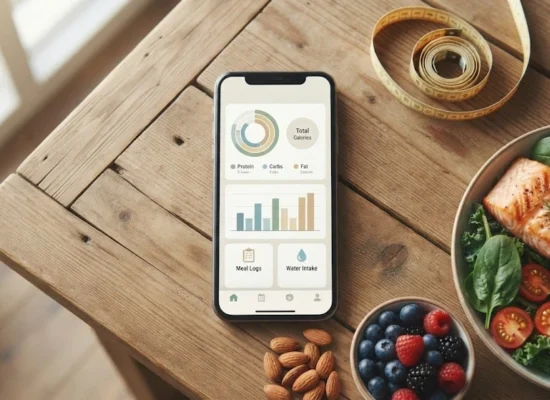
Apps powered by AI can track your mood daily, identify patterns in your sleep, flag when your stress levels seem to be creeping up, and remind you to do the things that actually help — drink water, go for a walk, call a friend.
Over weeks and months, this kind of data can be surprisingly revealing. One user described it as “like having a mirror that shows you things you’d been too busy to notice about yourself.”
Stress Management and Self-Care
Breathing exercises. Guided meditation. Grounding techniques for anxiety. Reminders to step away from your screen. These aren’t replacements for therapy — but they’re genuinely helpful tools for managing everyday stress, and AI delivers them without judgment.

Where AI Falls Short (And Why It Matters)
This is where the conversation gets important — and where honesty matters more than hype.
AI cannot Actually Feel Empathy
This sounds philosophical. It isn’t.
When a human therapist sits across from someone who has just lost their mother, something real happens. The therapist brings their own experience of loss, grief, and mortality. They may tear up. They sit in the silence with you. That silence means something — because two human beings are sharing it.
When you tell an AI the same thing, it generates a statistically appropriate response. Something like: “I’m so sorry for your loss. That must be incredibly hard.”
Those words might be exactly right. But there’s no one on the other side feeling them.
For many people, that distinction doesn’t matter much in mild moments. But in the depths of real grief or trauma? The absence of genuine human presence is felt.
It Misses What Isn’t Said
Experienced therapists often say that what clients don’t say is as important as what they do. The long pause before answering a question. The way someone’s voice tightens when they mention their father. The sudden flatness that comes over their face.
These are the signals that redirect a session — that tell a skilled clinician “we need to go deeper here.”
AI has none of this. It works only with the words you type. And words are a fraction of human communication.
It Can Get Things Wrong in Dangerous Ways
AI systems make mistakes. They misread context, miss sarcasm, or produce confident-sounding responses that are simply incorrect — what researchers call “hallucinations.”
In a low-stakes situation, that’s annoying. In a mental health context, it can be genuinely harmful. An AI that misreads a crisis, or offers advice that sounds plausible but isn’t appropriate for someone’s specific circumstances, isn’t just unhelpful — it’s dangerous.
What Recent Research Actually Found
Many people assume claims about AI therapy are just opinions, but there is now real research behind this topic. Scientists from top universities have started testing AI chatbots the same way they test human therapists — using real clinical standards, controlled trials, and expert reviewers. The results are mixed: AI does some things surprisingly well, but it also makes mistakes that a trained human never would. Here is what the studies actually show.
AI Can Make Serious Mistakes
A 2025 study by researchers at Stanford, Carnegie Mellon, and the University of Minnesota tested AI therapy chatbots against real clinical standards. The results showed a significant gap: licensed therapists gave the correct response 93% of the time, while AI chatbots did so less than 60% of the time. In some cases, the AI even agreed with users’ delusional beliefs rather than correcting them. This shows why AI should not be trusted alone in serious mental health situations.
Experts Couldn’t Always Tell AI and Humans Apart
In another 2024 study, 63 trained therapists were given real therapy transcripts and asked to guess which ones came from a human therapist and which came from an AI chatbot. Surprisingly, the therapists could only guess correctly 53.9% of the time — barely better than a random guess. This shows that, at least in text form, AI can sound a lot like a real therapist, even to trained professionals.
AI Can Sound More Caring Than Expected
A 2025 review in the British Medical Bulletin examined 15 studies and found that AI replies were often rated as more empathetic than those from real healthcare workers — but only in text chats. The researchers noted this is likely because text-based ratings miss things like tone of voice, facial expressions, and pauses, which a real person can pick up on but AI cannot.
AI Therapy Can Still Help With Real Symptoms
A clinical trial published in NEJM AI in 2025 tested an AI chatbot for people with depression and anxiety. After 8 weeks, users showed a real drop in their symptoms, and they even felt a strong sense of trust with the chatbot, similar to how people feel with human therapists. This shows AI can offer real, measurable help — even if it can’t fully replace therapy.
The Human Connection Still Matters Most
Even with these promising results, researchers keep pointing back to one thing: the relationship between a therapist and a client — known as the “therapeutic alliance” — is one of the strongest predictors of whether therapy actually works. A 2025 literature review on this topic confirmed that this trust and connection play a major role in helping people recover, especially from serious conditions like depression. This is the one part of therapy that AI still cannot fully replace, no matter how well it talks.
The One Thing AI Can’t Replicate: The Therapeutic Relationship
Decades of research point to one of the most consistent findings in all of psychotherapy: the single biggest predictor of whether therapy works isn’t the technique used. It’s the quality of the relationship between therapist and client.
The trust. The feeling of being truly known by another person. The experience of showing your worst self to someone who doesn’t flinch.
Maya, a 29-year-old teacher who spent three years in therapy after a difficult childhood, described it this way: “My therapist remembered things I’d said six months ago. She connected dots I didn’t even know were there. She knew me — really knew me — in a way no app ever could.”
That’s not a small thing. That’s often the whole thing.
Think about learning to swim. You can read every book about swimming. You can watch YouTube tutorials for hours. But when you’re actually in deep water, having an experienced instructor beside you feels entirely different. Therapy works similarly. The information matters — but human presence is often what creates the safety needed for real change.
Can AI Diagnose Mental Illness?
No — and this point deserves emphasis.
AI can provide educational information. Some apps include screening questionnaires that might point you toward certain conditions. But a formal clinical diagnosis is not something AI can reliably or safely provide.
A licensed mental health professional draws on years of training, clinical experience, and direct observation to make a diagnosis. They consider your full history, your physical health, and your life circumstances. They are also legally and ethically accountable for that assessment.
No major conversational AI system has been approved by the FDA to independently diagnose mental health disorders. And for good reason.
Is AI Therapy Safe?
This question doesn’t have a simple yes or no answer, but here’s what you should know:
Privacy is a real concern. Your conversations with an AI app may be stored, analyzed, or used to train future models. Read privacy policies carefully before sharing sensitive information.
AI is not legally accountable. A licensed therapist is bound by professional ethics, licensing boards, and legal standards. An AI chatbot isn’t. There’s no recourse if things go wrong.
Crises are where AI is most dangerous. If someone is experiencing suicidal ideation, severe self-harm urges, or a mental health emergency, AI is not equipped to provide appropriate crisis intervention. These situations require human professionals.
Bias is real. AI systems are trained on data created by humans — data that contains cultural biases, stereotypes, and blind spots. This can affect how they respond to users from different backgrounds.
So, When Should You Actually Use AI for Mental Health?
Here’s the truth: AI tools can be genuinely valuable — as long as you use them for what they’re actually good at.
AI may be enough when you’re dealing with:
- Mild, everyday stress or worry
- Workplace burnout and productivity struggles
- Building healthy habits
- Journaling and emotional reflection
- Learning coping strategies and stress management techniques
- Practicing mindfulness
- Bridging the gap between therapy appointments
You should see a licensed therapist for:
- Persistent depression or anxiety that won’t lift
- Trauma, PTSD, or childhood wounds
- Suicidal thoughts or self-harm urges
- Addiction and substance use disorders
- Eating disorders
- OCD, bipolar disorder, or other complex conditions
- Severe relationship conflict or domestic violence
Tom, a 41-year-old who used an AI app during a stressful career transition, put it well: “It helped me sort through my thoughts enough to realize I actually needed more than an app. It pointed me toward therapy, not away from it.”
That’s exactly how AI works best — not as a replacement, but as a signpost.

The Future: AI and Therapists Working Together
Here’s where it gets genuinely exciting.
The most promising future for mental health care isn’t AI versus therapists. It’s AI and therapists — each doing what they do best.
Already, AI tools are helping clinicians with session summaries, progress tracking, appointment scheduling, and treatment documentation — freeing up therapists to spend more of their time and energy on actual human connection.
The hybrid model taking shape looks something like this: weekly sessions with a therapist you trust, supplemented by daily check-ins with an AI wellness tool, automated mood tracking, personalized CBT exercises, and gentle reminders for the habits that support your mental health.
For many people, this combination could make mental health care more affordable, more consistent, and more accessible than ever before — while keeping the human connection at the center of genuine healing.
Common Myths Worth Clearing Up
“AI understands emotions just like humans do.” It doesn’t. It recognizes language patterns that are associated with emotions. That’s meaningfully different.
“AI can replace every therapist.” The research consistently shows that human therapeutic relationships drive long-term healing in ways AI can’t currently replicate.
“AI always gives the right answer.” AI can and does produce inaccurate, context-blind, or misleading responses. Treat its output as a starting point, not a verdict.
“AI therapy is completely private.” Privacy protections vary enormously by platform. Always check what data is stored, how it’s used, and who has access to it.
“Therapy is going to disappear because of AI.” The overwhelming consensus among mental health professionals and researchers is that therapists will remain central, while AI becomes an increasingly powerful support tool around them.
Frequently Asked Questions
Is AI therapy effective?
For mild stress, journaling, habit-building, and learning coping skills — yes, meaningfully so. As a replacement for professional therapy in serious situations — no.
Can AI diagnose depression or anxiety?
No. Educational information and screening questionnaires are not clinical diagnoses. Only a qualified professional can make that assessment.
Are AI mental health apps safe?
Many are thoughtfully designed. But safety varies widely. Read privacy policies, avoid them in emergencies, and treat them as supplements rather than solutions.
What is the biggest advantage of AI therapy?
Accessibility. The ability to reach someone — even a machine — at 2 a.m. when everything feels impossible is something the mental health system has never been able to offer at scale. That matters.
The Bottom Line
Can AI replace therapists?
Not in any meaningful sense — not the parts that actually heal people.
But that’s almost the wrong question. The more interesting question is: Can AI make mental health support more accessible to the millions of people who currently have none?
And there, the answer looks genuinely hopeful.
AI tools are already helping people learn about their mental health, build healthier habits, bridge the gaps between therapy sessions, and — critically — lower the threshold enough that people actually start asking for help.
What AI cannot do is be human. It cannot sit with you in your grief. It can’t remember the look on your face the last time this topic came up & not take responsibility for your care or hold your story the way another person holds it.
Those things are irreplaceable. And they remain, stubbornly and beautifully, the domain of human therapists.
The future isn’t man versus machine. It’s both, together — one making the other more possible.
If you’re currently struggling and need support, please reach out to a mental health professional or a crisis service in your area. AI tools are useful — but you deserve real human care too.
And if you want to know and learn about Artificial Intelligence, then read these Articles:




No Comment! Be the first one.